Wednesday, December 29, 2010
Last days of Kodachrome
When I think back
On all the crap I learned in high school
It's a wonder
I can think at all
And though my lack of edu---cation
Hasn't hurt me none
I can read the writing on the wall
Kodachrome
They give us those nice bright colors
They give us the greens of summers
Makes you think all the world's a sunny day, Oh yeah
I got a Nikon camera
I love to take a photograph
So mama don't take my Kodachrome away
If you took all the girls I knew
When I was single
And brought them all together for one night
I know they'd never match
my sweet imagination
everything looks WORSE in black and white
Kodachrome
They give us those nice bright colors
They give us the greens of summers
Makes you think all the world's a sunny day, Oh yeah
I got a Nikon camera
I love to take a photograph
So mama don't take my Kodachrome away
Mama don't take my Kodachrome away
Mama don't take my Kodachrome away
Mama don't take my Kodachrome away
Mama don't take my Kodachrome
Mama don't take my Kodachrome
Mama don't take my Kodachrome away
Mama don't take my Kodachrome
Leave your boy so far from home
Mama don't take my Kodachrome away
Mama don't take my Kodachrome
Mama don't take my Kodachrome away
--Paul Simon

Sunday, December 26, 2010
Looking closely at Christmas
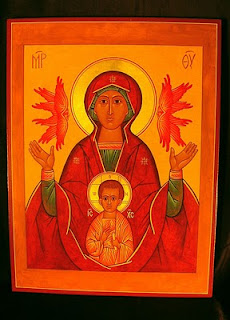 First Sunday after Christmas, December 26, 2010
John 1:1-18
Have you ever looked at a flower? What do you see? Maybe beautiful color, the shape of the leaves, the way the petals are constructed. Maybe you look at a flower in terms of where it fits, or the color of the outfit or the décor it will decorate. But there is more to the flower. We just need to see it differently. The theoretical physicist, Richard Feynman, who worked on both the Manhattan Project and served on the commission that investigated the Challenger disaster, said her looked at flowers differently.
Once, during a TV interview, Feynman held up a flower. He commented that his artist-friend had said how wonderful it was that everyone could see its beauty, that no specialized knowledge was necessary to appreciate the wonder of the flower.
Feynman agreed that this was partially true, everyone could look at the flower and see it; but as a scientist, he was able to “see” much more of the flower than most of us. He could see the beauty of the cells working together to support life; the mystery of the flower’s color, locked in its cells, that attracted insects; which, in turn, would lead him to wonder about the insect’s perception of color. In short, Feynman “saw” much more in that flower in a few minutes that most of us would see in a lifetime of looking.
We need to look at Christmas as closely as Feynman looks at the flower. Like Feynman, we can look into the holiday and see what many people miss: the mystery of the Incarnation. We have an additional, different task: having seen what others missed, we must tell what we have seen and heard.
The snowstorm today may change this, but I’ll bet you a cup of Bishop’s Blend that this week’s trash pick-up will be littered with discarded Christmas trees. Today, the world around us has moved on. Christmas Day is nice, but that was yesterday.
But we Christians have another eleven days to ponder the mystery of the season. Sure the relatives and friends may still be around for another day or two, or maybe having spent Christmas with one set of parents, we will be off to spend New Years with another, but on the whole, society will move into white sales and is getting ready for New Years Eve and the Bowl games. This gives us space to ponder Christmas more deeply. Now that we are free of the commercial sides of the cultures holiday, we can go deeper. Now we can “see” Christmas in new, deeper ways.
This first half of the first chapter of the Gospel of John is the perfect place to start. It invites us to look at the Incarnation in the same way that Richard Feynman looked at the flower. The prologue to John’s gospel is the same Gospel lesson for Christmas Day and the Sunday following Christmas. So we’ve been given the chance to marinate in the words a bit. We love the beauty of the words and even if they are a mystery to us they become part of us.
The prologue from John sets the tone for the whole Gospel; if you want to know the point of the Gospel of John, it’s in verse 18: “No one has ever seen God. It is God the only Son, who is close to the Father’s heart, who has made him known.”
As I’ve said, only Matthew and Luke have nativity stories. So there are no animals in this Gospel. No manger, no shepherds and in John’s Gospel there no angels until the empty tomb. What we do have is not a story, but a hymn, a poem. This is a hymn to Christ, maybe one of the earliest hymns in the Church. And it is a
For many of us Christmas is only about the baby. But look at this Christmas flower more deeply. See John’s hymn of the Incarnation. Look deeply into what God is doing and appreciate the mystery.
As I said on Christmas Eve, the baby whose birth we celebrate is also the Risen Christ. That means that the baby we celebrate is also the crucified Christ. To separate the story of Jesus’ birth from the crucifixion is to engage in a kind of denial. We like to welcome, cuddle and make silly faces at little babies. But Jesus’ birth reminds us that Jesus is the one who is not received. Luke tells us Jesus was born in a manger, maybe a cave, not only because there was no room in the inn, but perhaps because there was no room in the hearts of any of Joseph’s family for him and his pregnant girlfriend. Matthew’s story reminds us that the very people who hoped for God’s messiah would not receive him when they finally got the one for whom they hoped. Jesus and his family would become refugees instead. John tells us that Jesus was not recognized and he was rejected. The Nativity reminds us that when God came to us, he came as one who is weak and vulnerable, not just as the holy infant, but also as the adult who was sent to the cross and executed.
But Jesus, the weak, flesh-and-bone Christ, has real power. It is not the world’s power; it is not the power to conquer or be prosperous. Jesus’ power transforms us into the people God made us to be. Jesus’ power is to smother sin with love, to overcome fear with hope, to give us the tools and the power to choose faith. Jesus’ power transforms our vision so that we see us and all creation as God does—something lovely, something worth living, as people worth dying for.
Most people think that’s naïve and silly. They reject that kind of power. But Jesus, the rejected yet powerful one, comes full of grace and truth, which means that each Christmas we are presented us with a choice. We can be transformed by the power of the gospel to be God’s people, walking in God’s vulnerable ways. Or we can reject him and continue business as usual. Business as usual means sitting in the darkness, shielding our eyes, and turning away from the life-giving light. The story around which we gather today is one of transforming hope for a new life. We are invited to cooperate with God’s divine initiative, to allow God’s light to help us see the path more clearly, to make a new beginning as God’s people. Where that happens, heaven and earth do sing, there is joy to the world, and the waste places do break forth together in singing.
The Church gives us not one day, but twelve, to celebrate and look deeply into the birth of Christ, Emmanuel, God-with-us. If you have ever dreamed of a Christmas free of all the cultural trappings and commercial distractions that have surrounded us since August, here’s your chance. We can be like the physicist Feynman. We are called to ponder the mystery. Bask in the hope. Live the wonder. Tell the story. Because God does not abandon us like trees on the first trash day after Christmas. God is with us. Right now. Right here. The divinely naïve, lovingly risk-taking God of power and transformation has come to humanity. And we are changed.
See Also: Christmas Vigil and 2nd Sunday after Christmas
Saturday, December 25, 2010
Confronting evil with love
 Christmas Vigil - December 24, 2010
 Luke 2:(1-7)8-20
You are a miracle. And if you think you have a house full of relatives now, or if you wish you weren’t so alone this Christmas, I have news for you. You have more family than you think.
If some biologists and statisticians are right, then it is a miracle that you are even here on this earth because if your two parents had not bonded just when they did, possibly at that very second, possibly to the nanosecond – you wouldn’t be here. And if their parents had not done so in the same timely manner you wouldn’t be here either. Likewise this is true for their parents, and their parents before them, and so on and so on.
Bishop Andrew Doyle of the Diocese of Texas made this observation after reading a book by Bill Bryson called A Short History of Nearly Everything. It seems that, statistically speaking, these ancestral particularities really add up. Bishop Doyle writes:
Trace your lineage to the time of Abraham Lincoln and you have 250 of these unique and time sensitive parings. Go back to the time of Shakespeare and you have no less than 16,384 ancestors exchanging genetic material in a way that would eventually and miraculously result in you.Well, as Dr. McCoy might say, I’m a priest not a mathematician! The truth is that there have never, ever, been that many as people in existence on the earth as these numbers suggest. We’re talking odds here, not real numbers..and after a few generations the actual numbers and the odds begin to diverge. But this little exercise does tell us two things: what makes us “us” is dependent on some pretty precise time and place exchanges of DNA that goes back a long, long way.
At 20 generations each of you has 1 million, 48 thousand, and 576 unique parings. At 25 generations you and I have no fewer than 33 million 554 thousand 432 men and women upon whose “devoted couplings our existence depends.”
At 30 generations (remember these are moms and dads only) you are at 1 billion, 73 million, 741 thousand, and 824. At 64 generations, roughly the time of Jesus, our eventual existence depends upon no less than 10 to the 18th or 1 quintillion. If you trace this back to the time of King David you can more than double the number of unique, timely, miraculous couplings that have taken place to make you and I – quite particularly – us.
At the same time, this little mental exercise reminds us that we are all, quite literally, family. And so it is as family that we gather tonight to celebrate an even more unique birth, the birth of the Son of God, Jesus Christ, to Mary and Joseph.
Remembering that we are connected and that God loves and reaches out to all of us tonight is very important. The world was a hard, terrifying place two millennia ago when Jesus was born. It still is. Tonight, I am beginning to hear news stories of terror attacks on Christian churches and communities in both Nigeria and the Philippines, places where the tension between Muslims and Christians are reaching the boiling point.
In this country, Christianity faces a different kind of hostility: the kind that comes with benign neglect, scoffing and kind of self-destructiveness among us believers where we both berate and belittle fellow Christians and do things which make us look petty, rigid and mean.
People who peddle in evil and stoke fear--in and out of the the Church--want us to forget that we all family. They want us to forget that we are connected. They want us to focus on how we are different so that they make the people they hate and fear less than human. They want us to ignore what God is doing in the Incarnation.
Good people, when confronted with evil, always have a choice: they can meet force with force, evil for evil in a vain attempt to deter their opponent. That never works and only makes matters worse. They can give in to fear and hunker down and hide. This only gives evil people room to wreak havoc. Or they can confront evil with the very things that evil hates. It is that last choice that God undertakes when Christ is born.
Both Luke and Matthew’s Gospel provide details of Jesus’ birth but they are very different in their take on the birth of Jesus. The Gospel of Luke, the one we hear tonight, is perhaps the more familiar of the two. In it, Luke is eager to provide details of that unique and particular birth. He gives the names, the dates, and the places of our Savior’s birth. Luke tells us that Jesus, our Messiah and Savior, is born into an impoverished family with royal roots extending into the House of David. While many paintings and crèches, like our own in this church, show him being born in a stable, some traditions—such as the icon in our Chapel—show him being born in a cave. Mary and Joseph come to Bethlehem homeless and with no place to stay. Mary gives birth to Jesus in the middle of an outdoor or open air place where
Both Matthew and Luke go to great pains to connect Jesus’ birth with his death. They tell us that Jesus is not just an accident of DNA but sent by God for a specific purpose. If you read the end of Luke’s Gospel, the part about his death and resurrection and pair it up with Luke’s story of his birth, you will find that Jesus’ birth points to the cross. At the end of his life, Jesus’ body will be wrapped in linen, tonight he is swaddled in bands of cloth. After he dies, He will have no place of own in which to be laid to rest; tonight there is no room in the inn. He will be laid to rest in a tomb in a cave; tonight he sleeps in a manger, perhaps in a cave, where animals feed. The first ones to hear God’s Good news about Jesus’ birth are shepherds; the people who first find Jesus’ empty tomb are women. The shepherds encounter a heavenly chorus; at the empty tomb, the women encounter an angel. In both instances, those to whom no good news is ever given receive the very first tidings of God’s great work of redemption. The shepherds hear an angelic chorus singing Glory to God;” the women come to their friends saying “He is risen!”
We, you and I, are like the shepherds in this story; not because we tend sheep, but because we are hopeful members of Christ’s family. Uniquely us and particularly us, we are given the opportunity to make a worshipful response to Christ’s birth tonight.
Once again for the first time, we are given the opportunity to leave this place glorifying and praising God. We are given the opportunity to place the words of salvation on our lips for others to hear. We are given the opportunity to feel in our hearts the love of Jesus Christ that welcomes all people. We are given the opportunity to share Christ’s love to the people who are lonely, sick, outcast or despondent. We are given the chance to feed the hungry, care for the poor and bring dignity and hope to people for whom these have been taken away. We are given the opportunity to embrace a light that enlightens our souls with faith and hope – which darkness may not overcome.
The ways that we fend off evil is to do the things that evil hates. Like the man I spoke with this week who is sitting at the bedside of a dying, unconscious man—not family in the normal sense of the word, but now a loved one—because he has no family to speak of and he doesn’t want his friend to be alone on Christmas. Like the dozen or so people from all over the community who came to cut lettuce and set up tables and will be cooking turkeys in our new kitchen so that the homeless, the poor and the lonely can have Christmas dinner together.
Daring to bring compassion, daring to forgive, daring to love is a choice that brings the songs of angels to people who never hear good news. The baby whose birth we celebrate tonight is also the Risen Christ. Through the cross and resurrection, the one whose birth we celebrate heals the breach between humanity and God.
Tonight, God confronts evil head on—as a baby. Because God chooses to confront evil with love, we are able to wish one another Merry Christmas tonight out of a firm hope, tangible love, and a resilient faith. Tonight no one is a stranger, all are brother, sister, mother, and father. This baby, this messiah, this Christ, is God with us, healing and restoring the truth that we are all in fact God’s people, God’s family, and in him, we have become the shepherds of hope.
See also: 1st Sunday after Christmas and 2nd Sunday after Christmas.
Subscribe to:
Posts (Atom)